- Walton-on-the-Naze Pier is in Essex, England.
- Check access, weather and local guidance before travelling.
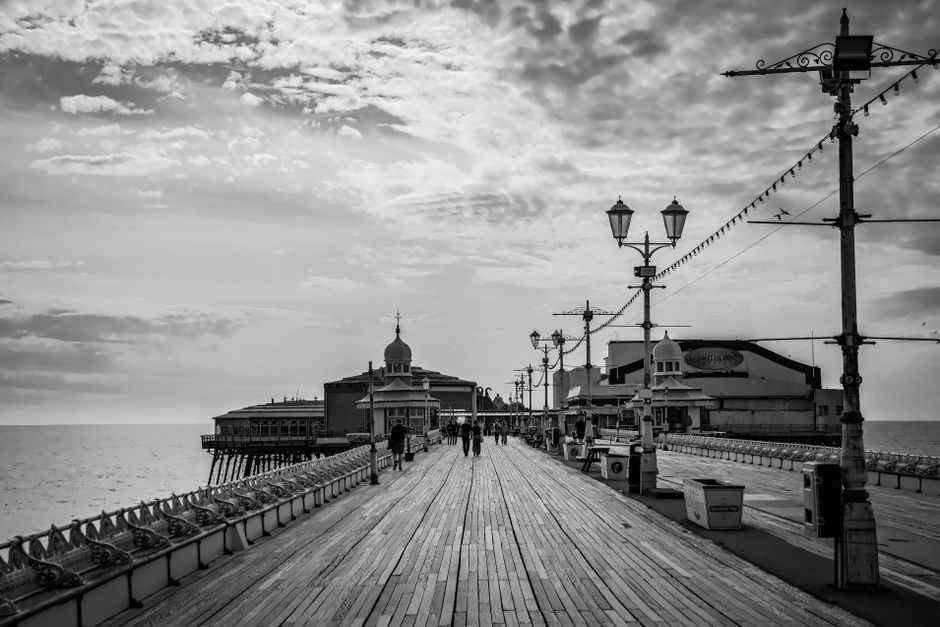
About Walton-on-the-Naze Pier
Walton-on-the-Naze Pier is a traditional amusement pier on the Essex coast, the last surviving pier in the Tendring peninsula. It houses amusements, a restaurant and a bowling green, and is at the heart of this family resort.
The story of Walton-on-the-Naze Pier
The original Walton Pier was opened in 1874, a wooden structure built by the Walton-on-the-Naze Pier and Hotel Company. The present iron pier was opened in 1898, designed by J. J. Webster and extended to 1,500 feet with a pier head pavilion and steamer landing. The pier was damaged by fire in 1907 and by storms in 1921 and 1953, the latter the catastrophic North Sea flood that devastated the East Coast. The pier was shortened and the pier head rebuilt. A bowling green was added on the pier deck in the postwar period, and the pier was further refurbished in the 1990s.
Visiting with care
Open year-round, the pier offers traditional amusements, ten-pin bowling and a restaurant. It is at the heart of Walton-on-the-Naze's seafront, convenient for the beach, the Naze nature reserve and the town's family attractions.
Interesting facts
- The original wooden pier opened in 1874, replaced by an iron pier in 1898.
- The present pier was designed by J. J. Webster and extended to 1,500 feet.
- Survived fire in 1907 and storms in 1921 and the 1953 North Sea flood.
- The last surviving pier on the Tendring peninsula.
Getting there
Parking and access details — check locally for the latest information.