- Skegness Pier is in Lincolnshire, England.
- Partial — storm damaged
- Check access, weather and local guidance before travelling.
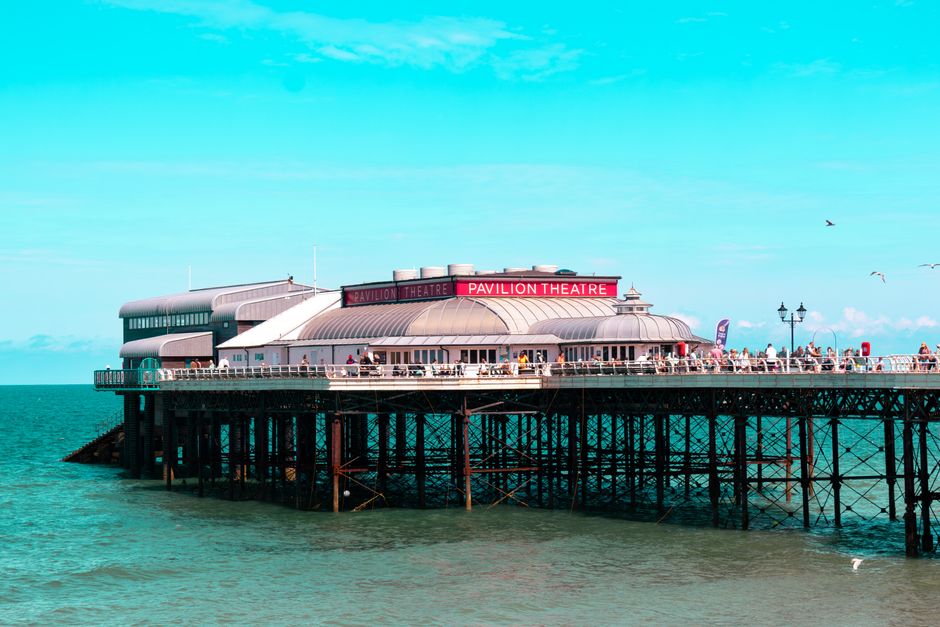
About Skegness Pier
Skegness Pier is a shortened Victorian pier on the Lincolnshire coast, damaged by storms and rebuilt as a modern amusement venue. It retains a short pier deck and houses amusements, a restaurant and family attractions.
The story of Skegness Pier
The pier was opened in 1881, designed by J. W. Wilson and built by the Skegness Pier Company, originally extending 1,427 feet with a pier head pavilion and steamer landing stage. The pier was hit by a ship — the schooner Europa — in 1882, just a year after opening. A series of storms in the 1970s and 1980s damaged the structure, and in 1978 a storm breached the pier mid-way, leaving the pier head isolated offshore. The remaining shoreward section was rebuilt as a modern amusement complex, reopening in the 1980s and undergoing further renovation in the 2010s with a new restaurant and soft play area.
Visiting with care
Open year-round, the pier is now an indoor family venue with amusements, a restaurant and a soft play area. It is on Skegness's central seafront, close to the Clock Tower and the town's other attractions.
Interesting facts
- Opened in 1881, originally 1,427 feet long with a steamer landing.
- Hit by a ship, the schooner Europa, just one year after opening in 1882.
- A 1978 storm breached the pier, leaving the pier head isolated offshore.
- The shoreward section was rebuilt as a modern amusement complex.
Getting there
Parking and access details — check locally for the latest information.