- Southport Pier is in Merseyside, England.
- Grade II — second-longest in England
- Check access, weather and local guidance before travelling.
About Southport Pier
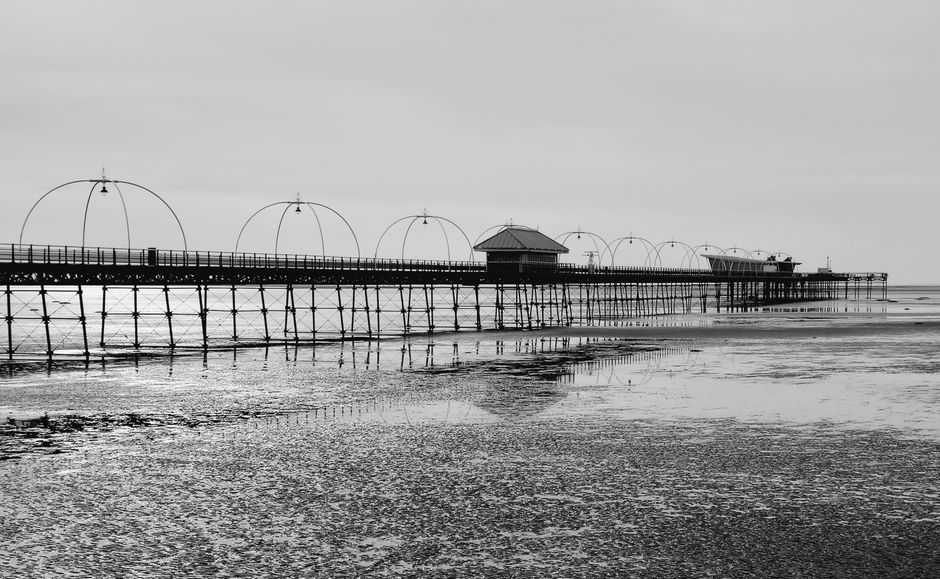
Southport Pier is the second-longest pleasure pier in England, a Grade II listed iron pier stretching over 3,000 feet across the vast sandy flats of the Ribble estuary. A tram service carries visitors the full length to the pier head.
The story of Southport Pier
The pier was opened in 1860, designed by James Brunlees and built by the Southport Pier Company as a promenade and steamer landing pier. It was extended to its current length of 3,650 feet in 1868, making it the second-longest in Britain after Southend. The pier was badly damaged by a fire in 1933 that destroyed the pavilion, and it fell into serious disrepair in the late 20th century, closing in 1998. A £6.7 million restoration by Southport Borough Council reopened the pier in 2002, including a new pier tram to carry visitors the full length.
Visiting with care
Open daily in season with a small admission charge; the pier tram runs to the pier head where there is a pavilion with views across the Ribble estuary to North Wales. The tide goes out for miles here, so the pier is the best way to actually reach the sea.
Interesting facts
- The second-longest pleasure pier in England at 3,650 feet (1,110 metres).
- Designed by James Brunlees and opened in 1860.
- Closed in 1998 due to disrepair and reopened in 2002 after a £6.7 million restoration.
- A pier tram carries visitors the full length to the pier head.
Getting there
Parking and access details — check locally for the latest information.