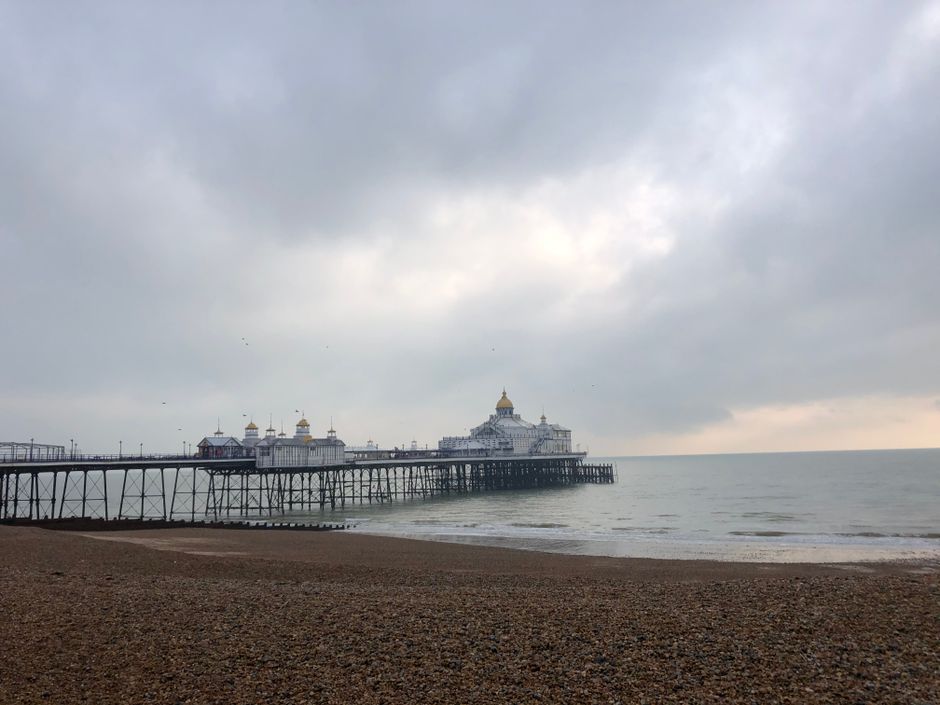
- Eastbourne Pier is in East Sussex, England.
- Grade II
- Check access, weather and local guidance before travelling.
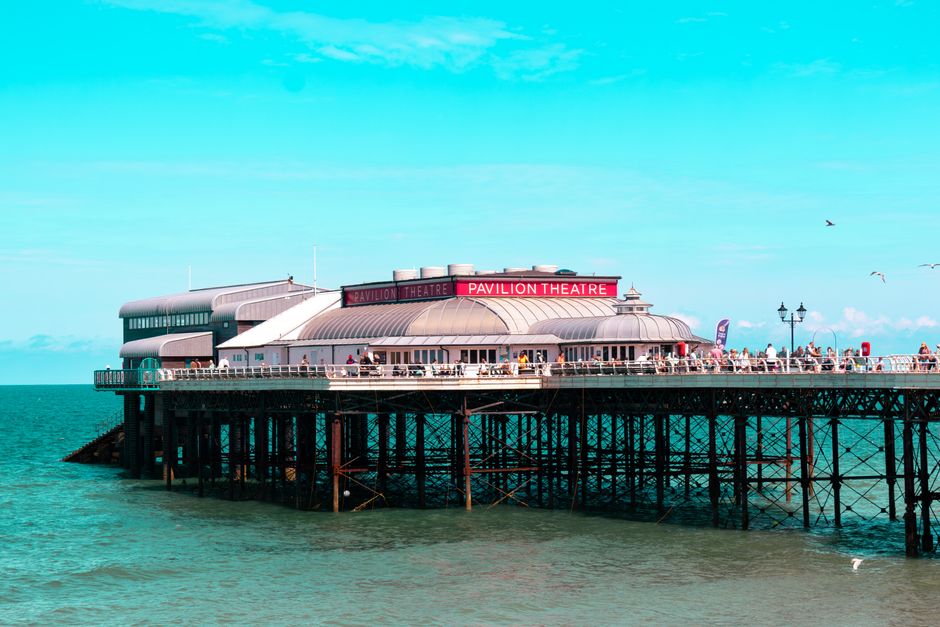
About Eastbourne Pier
Eastbourne Pier is a Grade II listed Victorian pier on the East Sussex coast, notable for its ornate Victorian architecture and a distinctive camera obscura at the pier head. It remains a traditional pleasure pier with amusements and a ballroom.
The story of Eastbourne Pier
The pier was opened in 1870 by the Eastbourne Pier Company, designed by Lieutenant-Colonel H. J. L. Palmer and built by local contractor J. L. Parlby, though it was not fully completed until 1872. A camera obscura — one of the few surviving in Britain — was installed at the pier head in 1889 and remains in working order. The pier was sectioned during the Second World War, and a fire in 1971 destroyed the original landing stage. A more recent fire in July 2014 destroyed part of the shoreward arcade, but the pier was repaired and fully reopened.
Visiting with care
Open year-round, the pier retains its traditional character with amusement arcades, a Victorian tea room and the historic camera obscura which offers projected views of the surrounding coast. It is at the foot of Eastbourne's grand seafront promenade.
Interesting facts
- Opened in 1870, designed by Lieutenant-Colonel H. J. L. Palmer.
- Has one of the few working camera obscuras in Britain, installed in 1889.
- Damaged by fire in 1971 and again in 2014, both times rebuilt.
- Grade II listed, with a surviving Victorian ballroom at the pier head.
Getting there
Parking and access details — check locally for the latest information.