- Farne Islands NNR is in Northumberland, England.
- Seabird colony and seal haul-out, National Trust-managed
- Check access, weather and local guidance before travelling.
About Farne Islands NNR
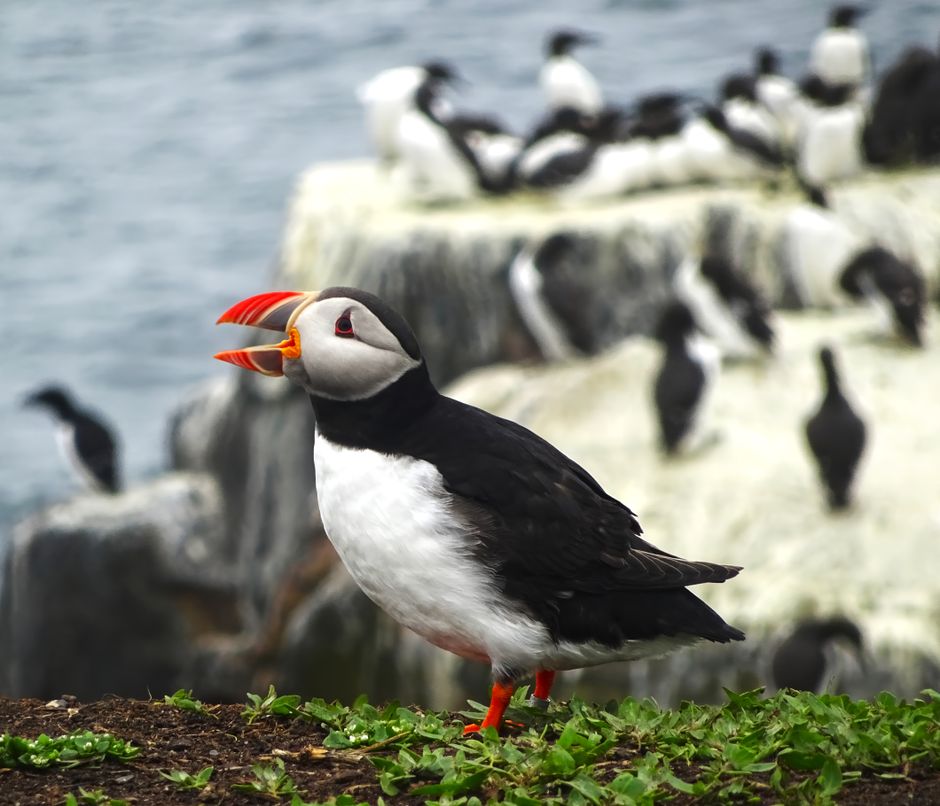
The Farne Islands are a scattered archipelago of rocky islets and stacks two to five miles off the Northumberland coast, managed by the National Trust as both a National Nature Reserve and a historic site. They hold one of the most celebrated seabird colonies in Britain, with puffins, guillemots, razorbills, kittiwakes and Arctic terns, alongside a large grey seal population.
The story of Farne Islands NNR
The islands were the home of St Cuthbert, who lived as a hermit on Inner Farne from 676 AD until his death in 687 and is said to have protected the eider ducks, still known locally as "Cuddy ducks". The medieval Pele Tower on Inner Farne was built in 1500 and was later used by Grace Darling's father William as the lighthouse keeper's residence. The most famous episode in the islands' history came on 7 September 1838, when Grace Darling and her father rowed through a storm from Longstone Lighthouse to rescue nine survivors of the wrecked steamer Forfarshire. The Farne Islands were declared a National Nature Reserve in 1951 and are now managed by the National Trust, which acquired them in 1925.
Visiting with care
Boat trips sail from Seahouses Harbour between April and October, landing on Inner Farne and Staple Island in calm weather. Bring a hat — Arctic terns dive-bomb visitors walking near their nests — and stay on the marked boardwalks to avoid crushing puffin burrows.
Interesting facts
- St Cuthbert lived as a hermit on Inner Farne from 676 AD and is said to have protected the eider ducks still called "Cuddy ducks".
- Grace Darling and her father rescued nine survivors of the wrecked Forfarshire on 7 September 1838 from Longstone Lighthouse.
- The islands hold around 40,000 breeding puffin pairs, one of the largest puffin colonies in England.
- The Farne Islands were declared a National Nature Reserve in 1951 and are owned and managed by the National Trust.
Getting there
Parking and access details — check locally for the latest information.