- Llandudno Pier is in Conwy, Wales.
- Grade II* — longest in Wales
- Check access, weather and local guidance before travelling.
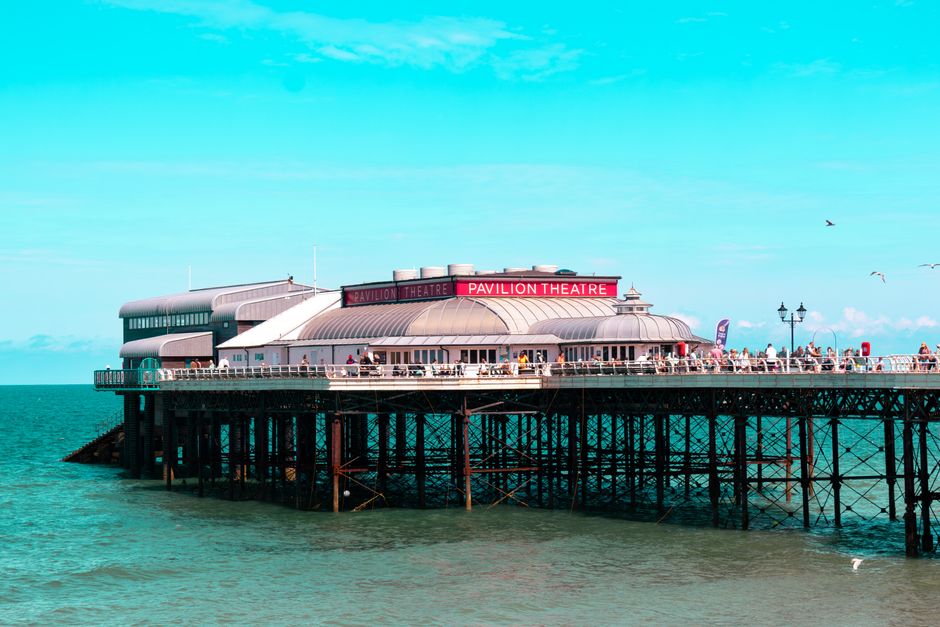
About Llandudno Pier
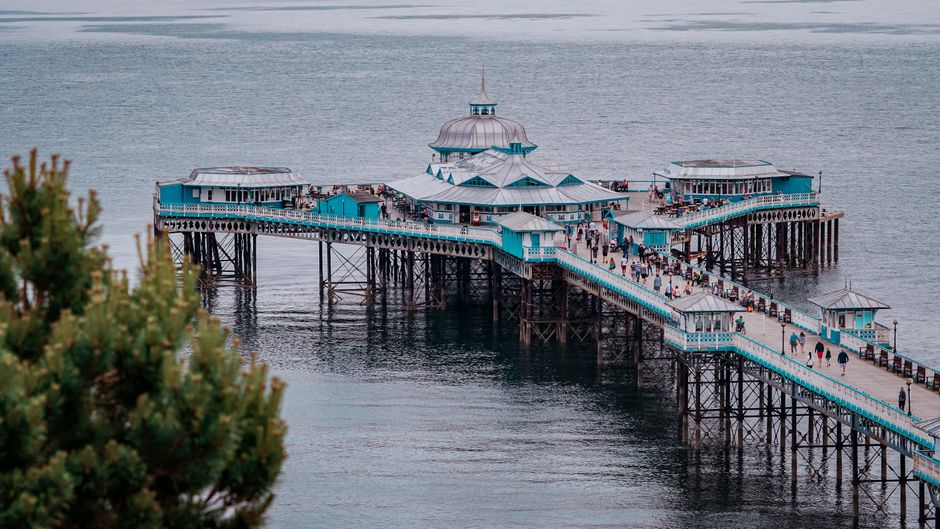
Llandudno Pier is the longest pier in Wales, a graceful Grade II* listed Victorian structure on the North Wales coast. Its elegant proportions and views across the bay to the Great Orme make it one of the most photographed piers in Britain.
The story of Llandudno Pier
The pier was opened in 1878, designed by Charles Henry Driver and James Ebenezer Saunders and built by the Llandudno Pier Company at a cost of £17,000. It replaced an earlier 1858 pier on the same site, which had proved too short for steamers and was demolished. The present pier extends 2,295 feet, making it the longest in Wales. A pier pavilion was added in 1883 for variety shows, and the pier was damaged by fire in 1896 and 1905, both times rebuilt. The pier was Grade II* listed in 1976 and remains a traditional pleasure pier with a silver band performing in season.
Visiting with care
Open year-round, the pier has a traditional amusement arcade, a café and a variety theatre. It is at the heart of Llandudno's North Shore promenade, with the Great Orme tramway and the town's Victorian shopping streets close by.
Interesting facts
- The longest pier in Wales at 2,295 feet (700 metres).
- Opened in 1878, designed by Charles Henry Driver and J. E. Saunders.
- Replaced an earlier 1858 pier that was too short for steamers.
- Grade II* listed and damaged by fires in 1896 and 1905, both times rebuilt.
Getting there
Parking and access details — check locally for the latest information.